
VID practice & study guide
Learn the signs and rules, then test yourself under exam conditions.
Learn the rules behind the questions
Five topics covering road signs, road users, the rules of the road, traffic offences and the Highway Code. Tap a topic to open it.
01 SADC road signs & signals Warning, regulatory and informative signs, traffic lights and carriageway markings with the action each one requires.
CLASS A · ⚠️ Danger Warning Signs
Bends & road layout
| Sign | Meaning | What the driver should do |
|---|---|---|
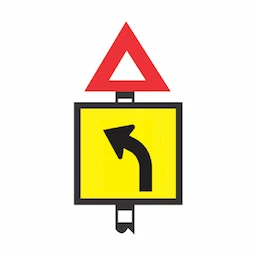 A01 Sharp bend left |
A sharp left bend lies ahead. | Slow down before the bend and keep to your lane. |
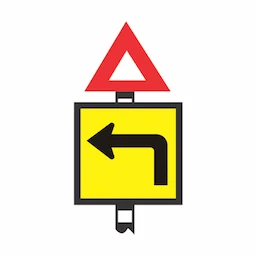 A02 Turn left ahead |
A left turn or bend is ahead. | Reduce speed and steer carefully. |
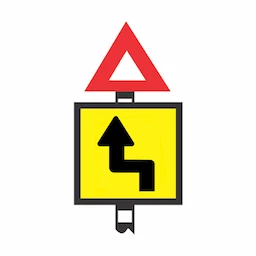 A03 Winding road ahead |
The road changes direction ahead. | Slow down and be prepared for successive bends. |
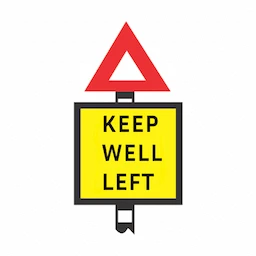 A04 Keep well left |
A warning to keep well to the left. | Keep to the left and watch for opposing traffic. |
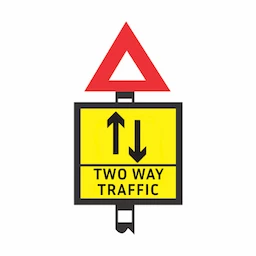 A05 Two-way traffic |
Traffic may travel in both directions ahead. | Keep left and watch for approaching vehicles. |
Road surface & restrictions
| Sign | Meaning | What the driver should do |
|---|---|---|
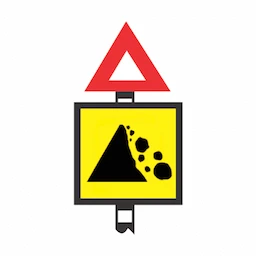 A06 Falling rocks |
Rocks may fall onto the road. | Watch for fallen rocks and avoid stopping in the danger area. |
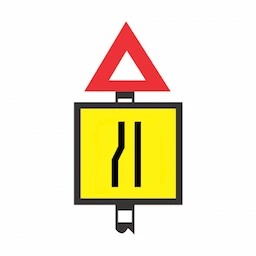 A07 Road narrows |
The roadway narrows ahead. | Reduce speed and allow clearance for other vehicles. |
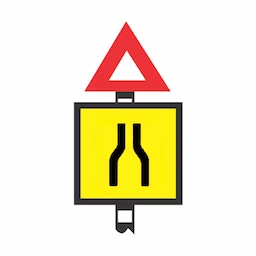 A08 Narrow bridge |
A narrow bridge or narrow section lies ahead. | Slow down and check that you can pass safely. |
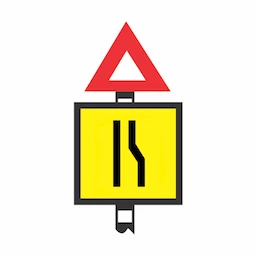 A09 Road narrows on one side |
One side of the road becomes narrower. | Reduce speed and position your vehicle safely. |
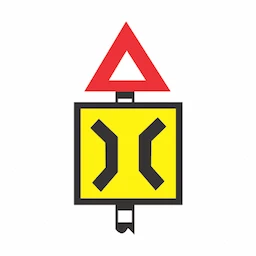 A10 Narrow passage |
The available road width is restricted. | Slow down and pass through carefully. |
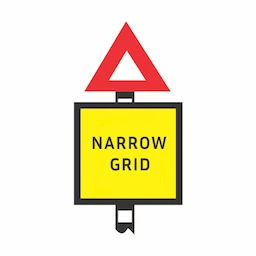 A11 Narrow grid |
A narrow grid or crossing is ahead. | Reduce speed and follow the indicated path. |
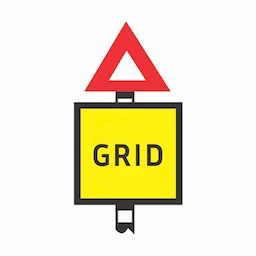 A12 Grid ahead |
A grid is ahead. | Approach slowly and cross with care. |
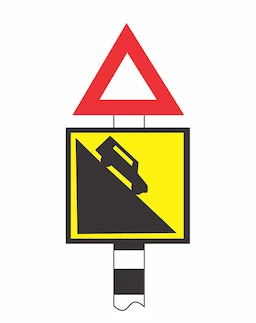 A13 Steep descent |
A steep downhill section is ahead. | Reduce speed early and select a suitable gear. |
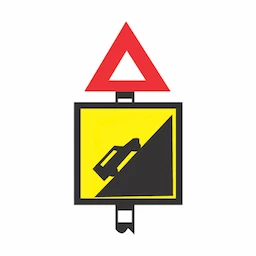 A14 Steep ascent |
A steep uphill section is ahead. | Select a suitable gear and maintain control. |
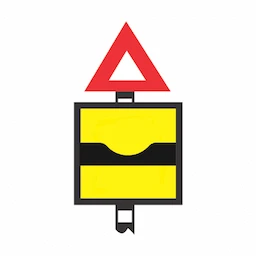 A15 Dip ahead |
There is a dip in the road. | Reduce speed and watch for water or reduced visibility. |
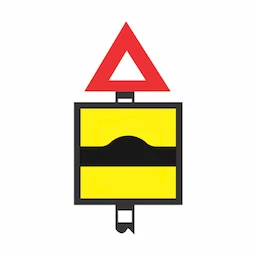 A16 Hump ahead |
There is a hump or raised section in the road. | Slow down before reaching the hump. |
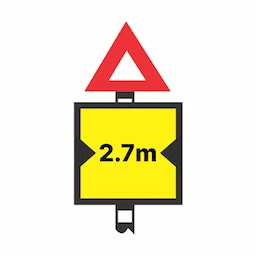 A17 Width restriction 2.7 m |
A width restriction of 2.7 metres is indicated. | Check vehicle width and proceed only if there is enough clearance. |
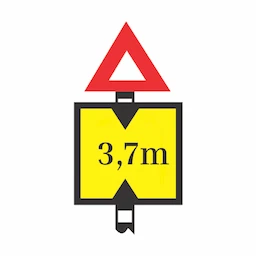 A18 Height restriction 3.7 m |
A height restriction of 3.7 metres is indicated. | Check vehicle height before proceeding. |
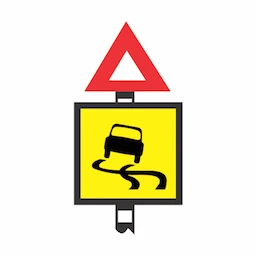 A19 Slippery road |
The road surface may be slippery. | Reduce speed and avoid sudden braking or steering. |
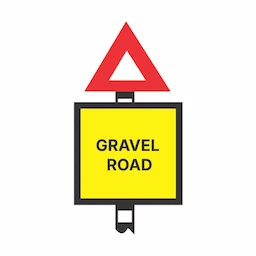 A20 Gravel road |
A gravel road section is ahead. | Slow down and allow extra stopping distance. |
Junctions & crossings
| Sign | Meaning | What the driver should do |
|---|---|---|
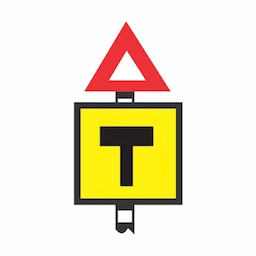 A21 T-junction ahead |
The road ends at a T-junction. | Slow down, look for cross traffic and give way as required. |
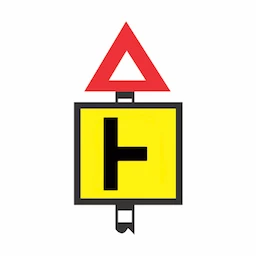 A22 Side road junction |
A side road joins from the right. | Watch for traffic entering from the side road. |
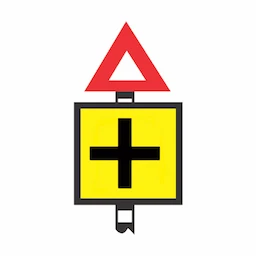 A23 Crossroads ahead |
A crossroads is ahead. | Slow down and check traffic from both sides. |
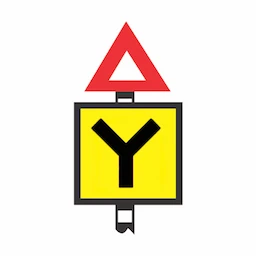 A24 Y-junction ahead |
The road branches at a Y-junction. | Choose your route early and watch for merging traffic. |
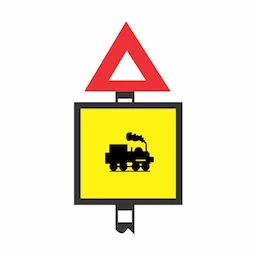 A25 Warning of rail/road level crossing ahead |
A railway level crossing is ahead where the road crosses railway tracks. | Slow down, watch for trains and crossing signals, and stop when required. Never enter the crossing unless it is safe to clear it. |
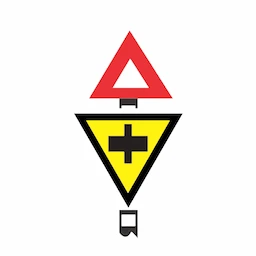 A26 Junction priority warning |
A junction or crossing arrangement is indicated ahead. | Slow down and follow the signs at the junction. |
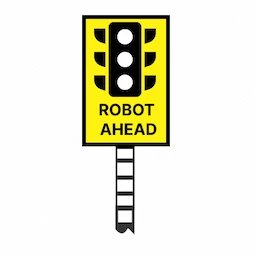 A27 Robot (traffic signals) ahead |
Traffic lights are ahead. | Be ready to stop for the signals. |
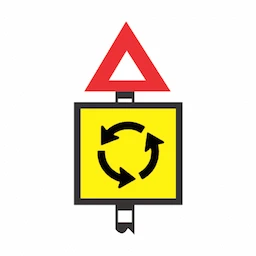 A28 Roundabout ahead |
A roundabout is ahead. | Slow down and give way according to the roundabout signs and markings. |
People & animals
| Sign | Meaning | What the driver should do |
|---|---|---|
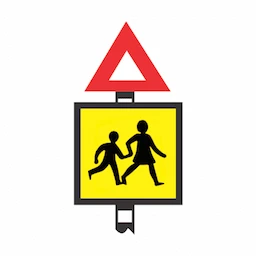 A29 Schoolchildren crossing |
Children may cross the road ahead. | Slow down and be ready to stop. |
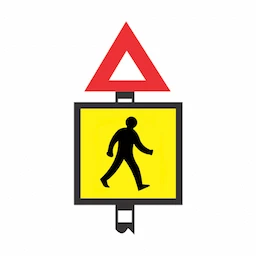 A30 Pedestrians ahead |
Pedestrians may be on or near the road. | Watch carefully and give way when required. |
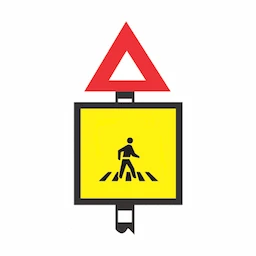 A31 Pedestrian crossing |
A pedestrian crossing is ahead. | Approach slowly and be ready to stop for pedestrians. |
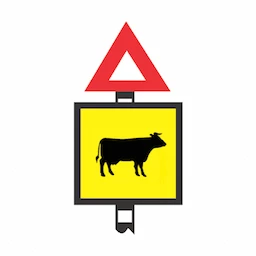 A32 Cattle ahead |
Cattle may cross or be on the road. | Slow down and allow animals plenty of space. |
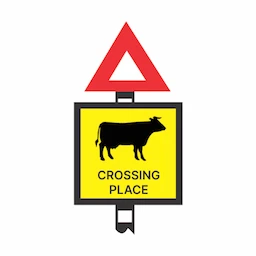 A33 Cattle crossing place |
A designated cattle crossing place is ahead. | Watch for livestock and be ready to stop. |
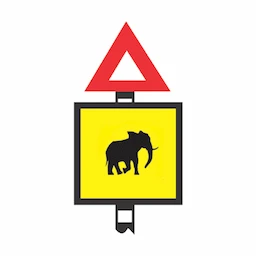 A34 Elephants ahead |
Elephants may be present on or near the road. | Slow down, keep a safe distance and do not approach wildlife. |
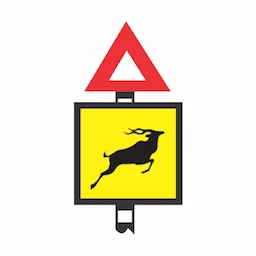 A35 Wild animals ahead |
Wild animals may cross the road. | Reduce speed and scan the roadside. |
Temporary hazards
| Sign | Meaning | What the driver should do |
|---|---|---|
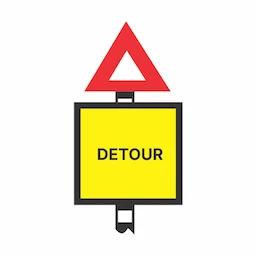 A36 Detour ahead |
A detour is indicated ahead. | Follow temporary route signs and drive carefully. |
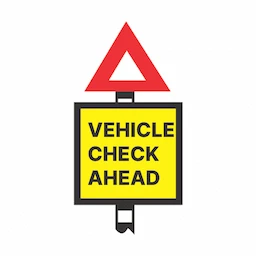 A37 Vehicle check ahead |
A vehicle check is indicated ahead. | Slow down and follow authorised instructions. |
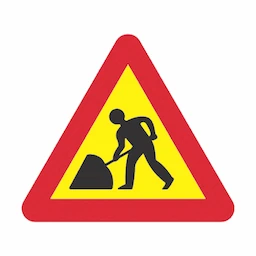 A38 Roadworks |
Roadworks or workers may be present ahead. | Slow down and obey temporary traffic controls. |
Road conditions
| Sign | Meaning | What the driver should do |
|---|---|---|
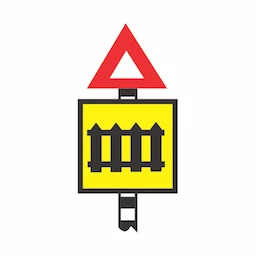 A39 Warning of physical barrier ahead |
A physical barrier is ahead on or near the roadway. | Reduce speed, watch for the barrier and follow any directions or restrictions. |
CLASS B · 🚫 Regulatory Signs
Movement
| Sign | Meaning | What the driver should do |
|---|---|---|
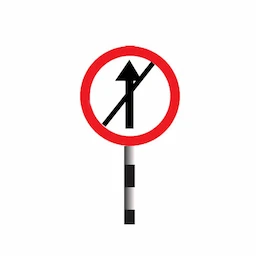 B01 Passage prohibited |
Vehicles may not proceed in the indicated direction. | Do not travel in the prohibited direction. |
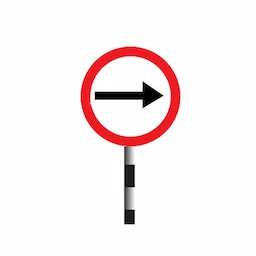 B02 Direction to be followed |
Traffic must follow the direction shown by the arrow. | Proceed in the indicated direction. |
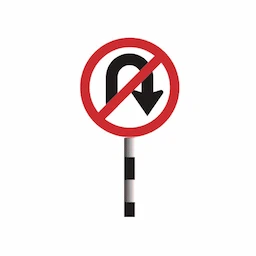 B03 No U-turn |
Making an about-turn is prohibited. | Continue until a permitted turning location. |
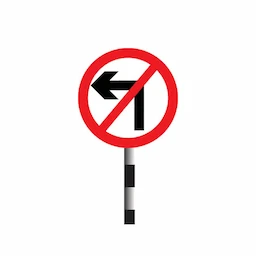 B04 No left turn |
Turning left is prohibited. | Choose another permitted route. |
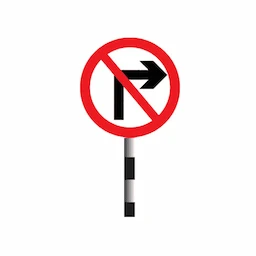 B05 No right turn |
Turning right is prohibited. | Do not turn right at this location. |
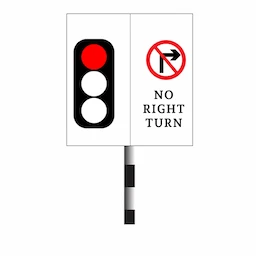 B06 No right turn at traffic lights |
The supplementary sign prohibits a right turn at the traffic signal. | Obey the prohibition even when the signal permits other movements. |
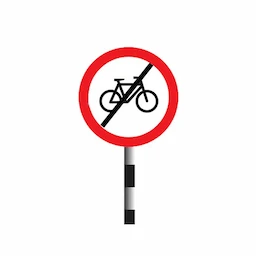 B07 Cyclists prohibited |
Cyclists may not use the route. | Cyclists must use a permitted alternative route. |
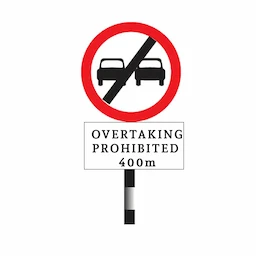 B08 No overtaking |
Overtaking is prohibited over the indicated distance. | Remain behind other vehicles until the restriction ends. |
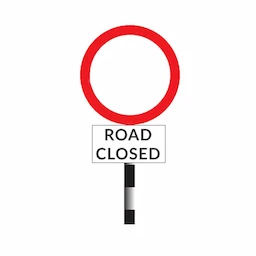 B09 Road closed |
The indicated road is closed to vehicular traffic. | Use another permitted route. |
Parking & Stopping
| Sign | Meaning | What the driver should do |
|---|---|---|
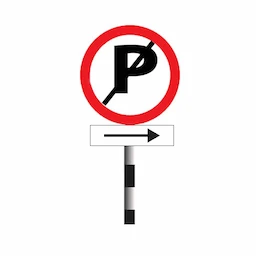 B10 No parking in arrow direction |
Parking is prohibited along the indicated section. | Do not park in the arrow direction. |
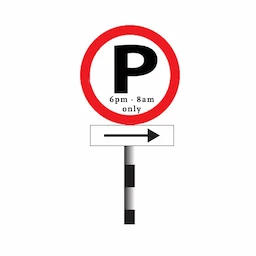 B11 Time-restricted parking (arrow) |
Parking is restricted during the period shown in the arrow direction. | Check the displayed times before parking. |
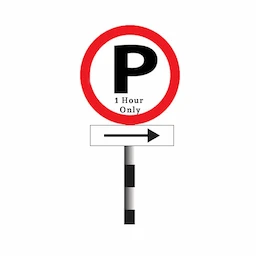 B12 Time-restricted parking |
Parking is subject to the time restriction shown. | Only park in accordance with the displayed restriction. |
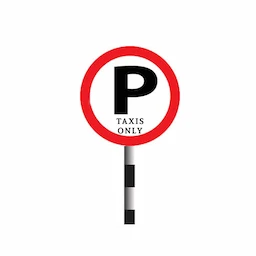 B13 Parking for specified vehicles |
Parking is reserved for the indicated vehicle class. | Do not park unless your vehicle qualifies. |
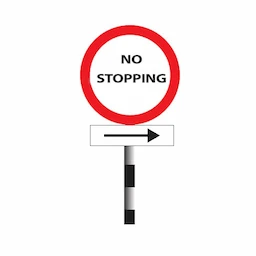 B14 No stopping in arrow direction |
Stopping is prohibited along the indicated section. | Do not stop in the direction shown. |
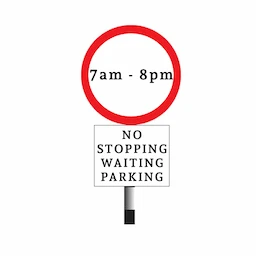 B15 No stopping, waiting or parking (times) |
Stopping, waiting and parking are prohibited during the displayed period. | Read and obey the times on the sign. |
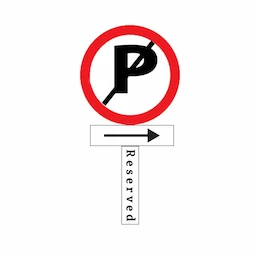 B16 Parking prohibited with exceptions |
Parking is prohibited except for vehicles specifically authorised by the indicated provision. | Only park if an exception legally applies. |
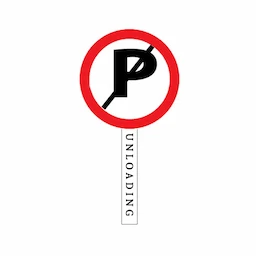 B17 No parking except loading |
Parking is prohibited except while loading or offloading goods. | Stop only for permitted loading or offloading. |
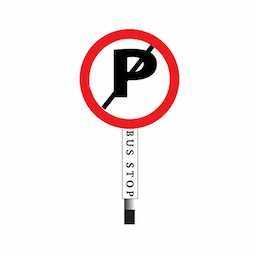 B18 No stopping except bus use |
Stopping is prohibited except for the specified bus activity. | Do not stop unless the exception applies. |
Controls & Priority
| Sign | Meaning | What the driver should do |
|---|---|---|
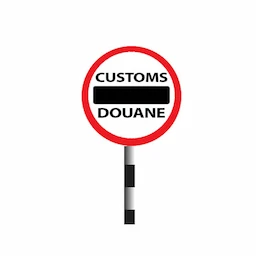 B19 Customs control |
Vehicles must stop at a customs control point. | Stop and follow customs officers’ instructions. |
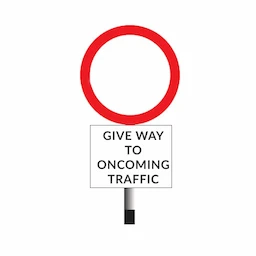 B20 Give way to oncoming traffic |
Priority must be given to approaching traffic on the same road. | Wait until oncoming traffic can pass safely. |
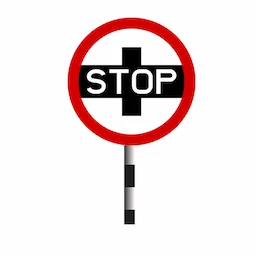 B21 STOP |
Drivers must stop at the stop line or appropriate stopping position. | Come to a complete stop and give way as required. |
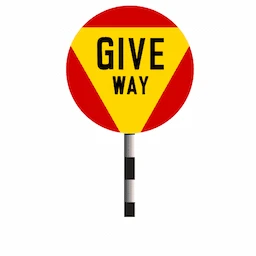 B22 GIVE WAY |
Drivers must give precedence to cross traffic. | Slow down and give way; stop if necessary. |
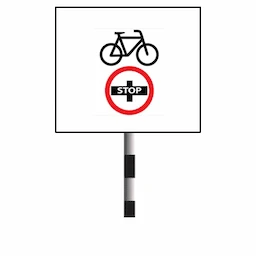 B23 Cyclists STOP |
Cyclists must stop before entering the road ahead and give precedence to traffic. | Stop fully and give way to road traffic. |
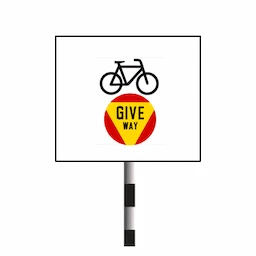 B24 Cyclists GIVE WAY |
Cyclists must give precedence to cross traffic. | Give Way before entering or crossing the road. |
Speed & Size
| Sign | Meaning | What the driver should do |
|---|---|---|
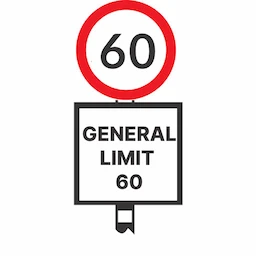 B25 General speed limit example: 60 |
Shows a 60 km/h sign with a general-limit supplementary plate. | Follow the applicable posted speed restriction. |
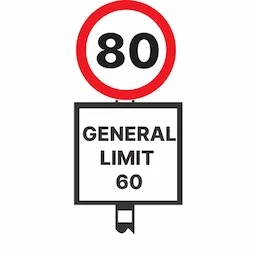 B26 Speed restriction differs from general limit |
Shows an 80 km/h sign with a general-limit comparison plate. | Obey the posted speed limit for this road section. |
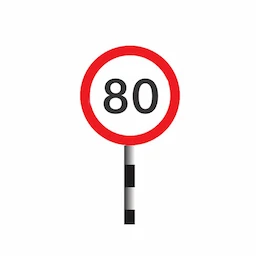 B27 Maximum speed: 80 km/h |
Driving faster than 80 km/h is prohibited. | Keep speed at or below 80 km/h. |
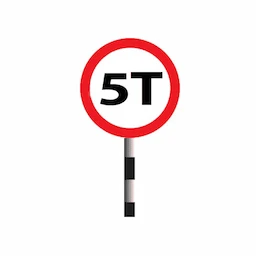 B28 Maximum gross mass: 5 tonnes |
Vehicles exceeding the stated gross mass are prohibited. | Do not enter if your vehicle exceeds the limit. |
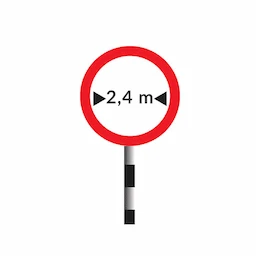 B29 Maximum width: 2.4 m |
Vehicles or loads wider than 2.4 m are prohibited. | Check total vehicle/load width before entering. |
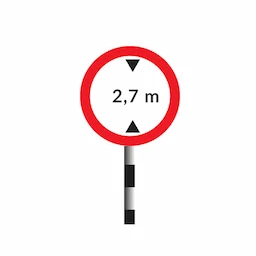 B30 Maximum height: 2.7 m |
Vehicles or loads taller than 2.7 m are prohibited. | Check total height before entering. |
Temporary Controls
| Sign | Meaning | What the driver should do |
|---|---|---|
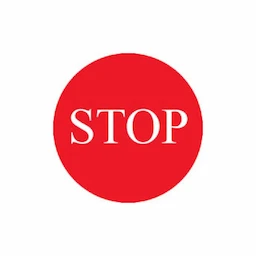 B31 Temporary STOP |
A temporary control instructs traffic to stop. | Stop and wait for permission to proceed. |
 B32 Temporary GO |
A temporary control permits traffic to proceed. | Proceed carefully only when the route is clear. |
CLASS C · 🛣️ Informative Signs
Directions
| Sign | Meaning | What the driver should do |
|---|---|---|
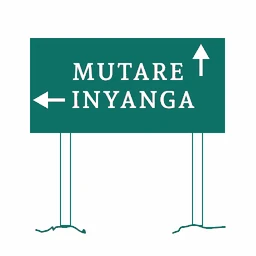 C01 Advance direction sign |
Directions to Mutare and Inyanga. | Follow the arrow for the intended destination. |
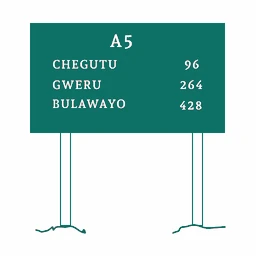 C02 Advance direction and distance sign |
Shows routes and distances to destinations. | Check the route and remaining distance. |
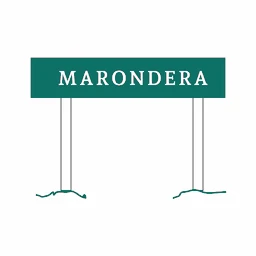 C03 Place name |
Identifies the named town or locality. | Use the sign to confirm your location. |
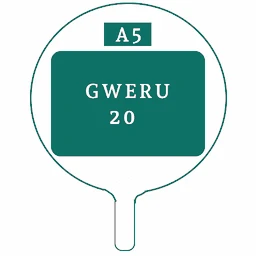 C04 Advance information sign |
Shows route and destination information in advance. | Prepare for the route indicated. |
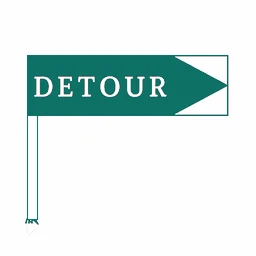 C05 Temporary detour |
Shows the direction of a temporary diversion. | Follow the detour when the normal route is closed. |
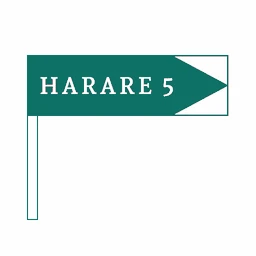 C06 Direction sign — Harare |
Points towards Harare. | Follow the indicated direction if travelling to Harare. |
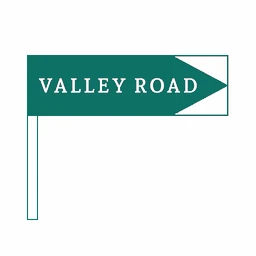 C07 Direction sign — Valley Road |
Points towards Valley Road. | Choose the indicated direction when appropriate. |
Road information
| Sign | Meaning | What the driver should do |
|---|---|---|
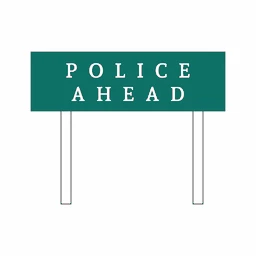 C08 Police control ahead |
Warns that police traffic control may be operating ahead. | Slow down and be prepared to stop. |
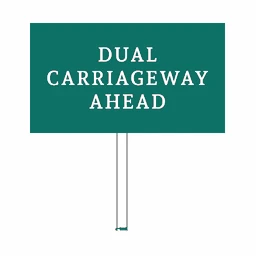 C09 Dual carriageway ahead |
Indicates a dual carriageway ahead. | Observe lane markings and signs as the road changes. |
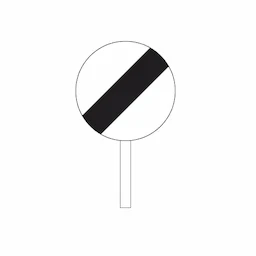 C10 End of special speed restriction |
Indicates the end of a specially imposed speed limit. | Observe the applicable general or newly posted speed limit. |
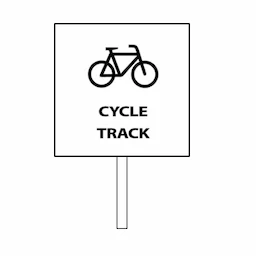 C11 Cycle track |
Indicates a cycle track. | Watch for cyclists and respect the designated track. |
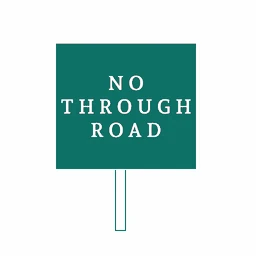 C12 No through road |
Indicates a road with no through passage. | Do not expect an onward exit. |
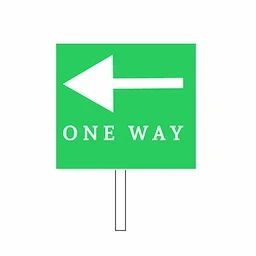 C13 One-way direction |
Indicates the direction of travel on a one-way road. | Travel only in the indicated direction. |
Services
| Sign | Meaning | What the driver should do |
|---|---|---|
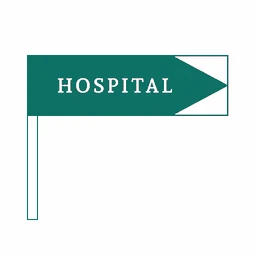 C14 Hospital direction |
Indicates the direction of a hospital. | Follow the arrow if seeking hospital facilities. |
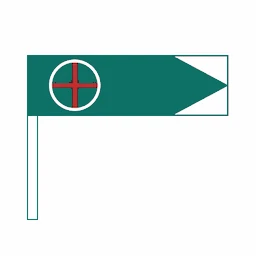 C15 First-aid facilities direction |
Indicates the direction of first-aid facilities. | Follow the sign if first aid is needed. |
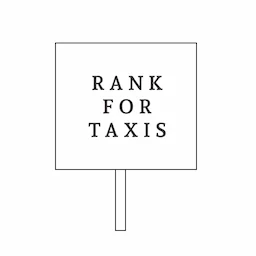 C16 Taxi rank |
Indicates a taxi rank. | Keep access clear and obey stopping restrictions. |
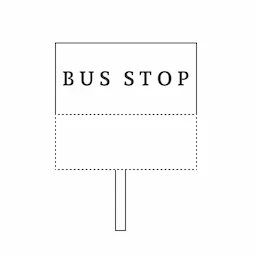 C17 Bus stop |
Indicates a bus stopping place. | Watch for buses and pedestrians. |
 C18 Parking area |
Indicates an area for parking. | Park only in designated spaces and follow local rules. |
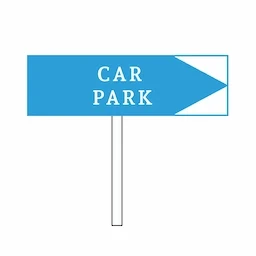 C19 Direction to parking |
Shows the direction of a parking area. | Follow the arrow to reach parking facilities. |
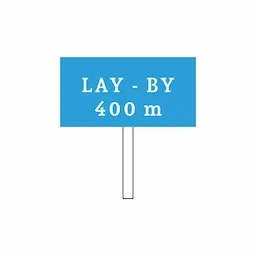 C20 Lay-by ahead |
Indicates a lay-by ahead. | Use it only when safe and permitted. |
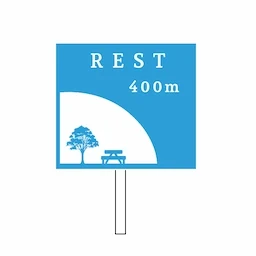 C21 Rest place ahead |
Indicates a rest area ahead. | Plan a rest stop if needed. |
CLASS D · 🚦 Traffic Light Signals
Traffic Lights
| Sign | Meaning | What the driver should do |
|---|---|---|
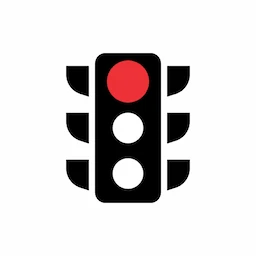 D01 Red robot |
A red robot means stop. | Stop behind the stop line and wait until a signal permits movement. |
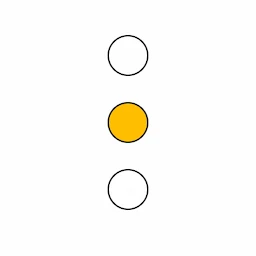 D02 Amber robot |
Amber warns that the robot is changing to red. | Stop if it is safe to do so. Do not accelerate to beat the light. |
 D03 Green robot |
A green robot means proceed with caution. | Proceed only if the way is clear, watching for pedestrians and other road users. |
 D04 Flashing amber light |
A flashing amber light warns drivers to approach cautiously. | Slow down, assess the junction and give way where required by the applicable road rules and signs. |
Directional Arrows
| Sign | Meaning | What the driver should do |
|---|---|---|
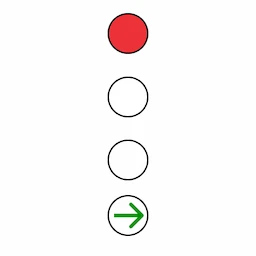 D05 Right-turn green arrow |
Traffic turning right may proceed when the right arrow is illuminated. | Turn right only in the direction shown, checking that your path is clear. |
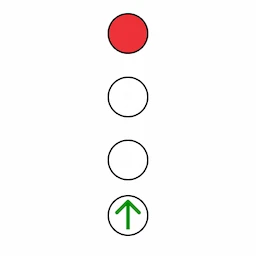 D06 Straight-ahead green arrow |
Only straight-ahead traffic may proceed when this green arrow is illuminated. | Proceed straight ahead only, when safe. |
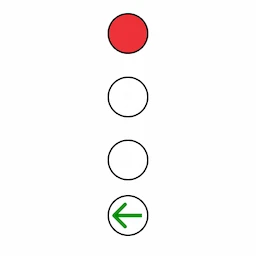 D07 Left-turn green arrow |
Traffic turning left may proceed when the left arrow is illuminated. | Turn left only in the direction shown, checking that your path is clear. |
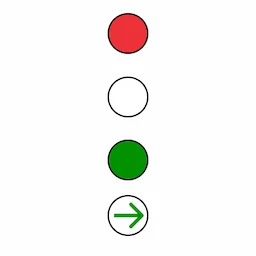 D08 Right-turn filter arrow |
The green arrow permits the indicated right turn while the red signal controls other movements. | Follow only the illuminated arrow and proceed with caution. |
Crossings & Warnings
| Sign | Meaning | What the driver should do |
|---|---|---|
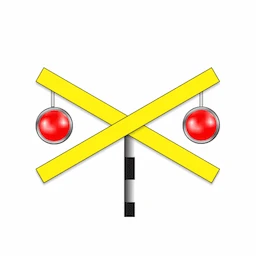 D09 Rail/road level crossing lights |
Flashing warning lights at a railway level crossing indicate danger from rail traffic. | Stop and do not cross while warning lights are flashing; proceed only when safe. |
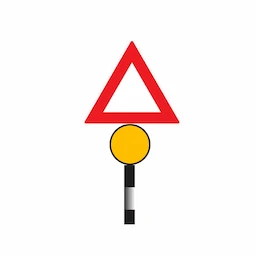 D10 Warning of stop |
A warning signal alerts approaching drivers that they may need to stop. | Slow down, watch the signal and be prepared to stop. |
CLASS E · 🛤️ Carriageway Markings
Lines
| Sign | Meaning | What the driver should do |
|---|---|---|
|
E01
E01 Broken White Centre Line
|
Separates opposing traffic; a broken dividing line permits crossing when safe. | Keep left. Cross to overtake only when permitted, visibility is clear and it is safe. |
|
E02
E02 Single Solid White Line
|
A no-overtaking marking that must not be crossed. | Stay to the left of the continuous line; do not cross it to overtake. |
|
E03
E03 Double Solid White Lines
|
A no-crossing marking with the highest level of longitudinal restriction. | Do not cross or straddle either line. |
|
E04
E04 Broken and Solid Combination
|
The restriction depends on the line nearest your lane. | Cross only from the broken-line side when it is otherwise safe and permitted. |
Edges
| Sign | Meaning | What the driver should do |
|---|---|---|
|
E05
E05 Broken Yellow Edge Line
|
A broken yellow line marks the left edge of the carriageway. Zimbabwean driving guidance recognises limited circumstances for crossing or straddling it. | You may cross or straddle a broken yellow edge line to stop safely or pass a vehicle turning right, provided the manoeuvre is safe and otherwise lawful. It is not a general overtaking lane. |
|
E06
E06 Continuous Yellow Edge Line
|
A continuous yellow line marks the left edge of the carriageway and restricts crossing or straddling it. | Keep to the roadway. Do not treat the continuous yellow line as permission to stop, overtake or use the shoulder. Follow applicable road rules and safety directions. |
|
E07
E07 Right White Edge Line
|
Marks the right edge of the roadway. | Keep within the marked roadway. |
Crossings
| Sign | Meaning | What the driver should do |
|---|---|---|
|
E08
E08 Stop Line
|
A solid transverse white line showing where drivers must stop when required by a STOP sign or traffic signal. | Stop before the line when the controlling sign or signal requires it. |
|
E09
E09 Give Way Line
|
A transverse marking associated with a GIVE WAY sign. | Slow down, give way to priority traffic, and stop when necessary. |
|
E10
E10 Zebra Pedestrian Crossing
|
White block markings indicate a pedestrian crossing. | Approach carefully and give way to pedestrians as required. |
|
E11
E11 Zig-zag Crossing Zone
|
Zig-zag markings protect visibility around pedestrian crossings. | Do not stop or cross the zig-zag marking except as legally allowed. |
Directions
| Sign | Meaning | What the driver should do |
|---|---|---|
|
E12
E12 Mandatory Direction Arrow
|
An arrow marking gives a compulsory direction for traffic in that lane. | Follow the marked lane direction; do not make a conflicting turn. |
|
E13
E13 Painted Island
|
A hatched area separates or channels traffic. | Do not drive across or stop on the painted island. |
|
E14
E14 Box Junction
|
A marked box controls traffic movement through a junction. | Do not enter if your exit is blocked; follow the applicable junction rules. |
Parking
| Sign | Meaning | What the driver should do |
|---|---|---|
|
E15
E15 Parking Bay
|
White lines define where a vehicle may be parked. | Park entirely within the marked bay where parking is permitted. |
|
E16
E16 No Parking Yellow Line
|
A yellow roadside marking restricts parking. | Do not park alongside it; accompanying signs may specify times. |
02 Road users Rules and responsibilities for drivers, riders, pedestrians, cyclists, passengers and animals.
Drivers
Safe driving requires more than knowing how to control a vehicle. Drivers must observe the road, anticipate other road users and follow the rules that keep traffic moving safely.
- Keep Left — In Zimbabwe, vehicles travel on the left. Keep within your lane and maintain a safe position on the road.
- Observe & Anticipate — Pay continuous attention to the road, traffic, pedestrians, cyclists, signs, signals and changing conditions around you.
- Following Other Vehicles — Leave enough space between your vehicle and the vehicle ahead to react and stop safely if traffic suddenly slows or stops.
- Overtaking — Overtake only when the road ahead is clear and the manoeuvre can be completed safely. In normal circumstances, overtaking is carried out on the right.
- Junctions & Precedence — Approach junctions with caution. Observe signs, signals and other traffic before proceeding, and yield precedence where required.
- Speed — Obey the applicable speed limit and adjust your speed to the road, traffic, visibility and weather conditions.
- Signals & Intentions — Signal clearly and in good time before turning or changing lanes. Always check that the intended movement can be made safely.
- Share the Road — Watch carefully for pedestrians, cyclists, motorcyclists, animals and other vulnerable road users.
Motorcyclists
Motorcyclists are less protected than occupants of enclosed vehicles. Protective equipment, visibility and keeping the motorcycle roadworthy are especially important.
- Wear a Crash Helmet — Motorcyclists and their passengers must wear protective crash helmets. A helmet should be correctly fitted and securely fastened.
- Be Visible — Make yourself easy for other road users to see. Reflective clothing is particularly important when riding at night.
- Carry Passengers Correctly — A passenger should be carried correctly on the pillion or in a sidecar. Only one passenger may be carried on the pillion, with suitable footrests provided.
- Sidecar Passengers — A maximum of two passengers may be carried in a motorcycle sidecar.
- Lights & Reflector — Ensure the motorcycle has the required lighting and reflector equipment, including effective front and rear lights for night riding.
- Brakes & Tyres — Brakes must work properly. Tyres should be in good condition, correctly inflated and suitable for safe road use.
- Check the Motorcycle — Keep the chain, wheels, bearings, handlebars, saddle, footrests and other important components properly maintained and secure.
- Avoid Excessive Noise — Keep the motorcycle’s silencing equipment effective and avoid unnecessary noisy acceleration.
Pedestrians
Pedestrians are among the most vulnerable road users. Safe walking, careful observation and choosing a safe place to cross can prevent serious collisions.
- Use the Footpath — Where a footpath or other suitable pedestrian area is available, use it rather than walking in the roadway.
- Walking Without a Footpath — Where there is no suitable footpath, keep as far from moving traffic as practicable and remain alert to approaching vehicles.
- Before Crossing — Stop where you can see traffic clearly. Check carefully for approaching vehicles and cross only when it is safe.
- Cross Directly — Cross the roadway carefully and without unnecessary delay. Avoid wandering diagonally across the road or remaining in the carriageway longer than necessary.
- Use Pedestrian Crossings — Where a pedestrian crossing is provided, use it correctly and continue to watch for traffic rather than assuming every vehicle has already stopped.
- Do Not Step Out Suddenly — Never move suddenly into the path of a vehicle, particularly from behind parked vehicles or other objects that prevent drivers from seeing you.
- Be Visible at Night — At night or in poor visibility, make yourself easier for drivers to see by wearing or carrying something light, bright or reflective where possible.
- Children & Vulnerable Pedestrians — Children, elderly people and other vulnerable pedestrians may need extra assistance and supervision near traffic.
Cyclists
Cyclists share the road with faster and heavier vehicles. They should ride predictably, remain visible and keep their bicycles in safe working condition.
- Keep Left — Cyclists should generally keep to the left and maintain a safe, predictable position on the road.
- Ride Predictably — Maintain a regular course. Do not weave unnecessarily in and out of traffic or make sudden changes in direction.
- Riding Abreast — Cyclists should never ride more than two abreast. Riding in single file is safer where traffic or road conditions require extra caution.
- Signal Your Intentions — Give clear signals before turning or changing position and make sure the intended movement can be completed safely.
- Look Before Moving — Before turning, overtaking or moving away from the side of the road, look carefully for traffic approaching from behind and ahead.
- Lights & Visibility — Use the required lights and reflectors when riding at night or in poor visibility, and make yourself easy for motorists to see.
- Maintain the Bicycle — Brakes, tyres, steering and other essential parts should be kept in good working order.
- Keep Proper Control — Ride with proper control of the bicycle and avoid carrying anything that interferes with steering, balance or safe observation of the road.
Passengers
Passengers also influence road safety. Safe behaviour while travelling, boarding and leaving a vehicle helps protect both passengers and other road users.
- Use Seat Belts — Where seat belts are fitted and required, passengers should use them correctly throughout the journey.
- Do Not Distract the Driver — Avoid behaviour that interferes with the driver’s attention, view or ability to control the vehicle safely.
- Board Safely — Wait until the vehicle is properly positioned and it is safe before boarding. Do not rush into the path of moving traffic.
- Leave the Vehicle Safely — Before opening a door or stepping from a vehicle, check for approaching vehicles, motorcycles, bicycles and pedestrians.
- After Leaving Public Transport — Do not immediately cross from in front of or behind a bus or other large vehicle where approaching drivers may not be able to see you.
- Remain Properly Seated — Travel in the proper passenger area and avoid unsafe positions that could cause you to fall or interfere with the operation of the vehicle.
- Protect Children — Children require appropriate supervision and should not be allowed to behave in a way that places them or the driver at risk.
- Keep Clear of Traffic — After leaving a vehicle, move to a safe place away from moving traffic before deciding where and when to cross.
Animals & Drovers
Animals can behave unpredictably around traffic. Riders, drovers and drivers of animal-drawn vehicles must keep animals under proper control and make their presence clear to other road users.
- Keep Animals Under Control — Animals being ridden, led or driven on a road should be kept under proper control and prevented from unnecessarily obstructing traffic.
- Use the Road Carefully — Keep animals in a safe position and remain alert to vehicles approaching from either direction.
- Herding Animals — When moving a herd or flock along or across a road, keep the animals together and use sufficient control to reduce danger to traffic.
- Warn Other Road Users — Give other road users adequate warning when animals are being led or herded on the road, particularly where the animals may affect the normal flow of traffic.
- Visibility — Riders, drovers and animal-drawn traffic should be made clearly visible, especially at night or when visibility is poor.
- Animal-Drawn Vehicles — Animal-drawn vehicles should be properly controlled and equipped so that other road users can identify them and react safely.
- Crossing a Road — Before moving animals across a road, check approaching traffic and allow enough time to move them across without creating unnecessary danger.
- Drivers Near Animals — Motorists approaching animals should reduce speed, allow sufficient space and avoid unnecessary noise or actions likely to frighten them.
03 Rules of the road Left-hand traffic, following distance, overtaking, speed, signals, junctions, roundabouts and precedence.
Keep Left & Lane Discipline
Zimbabwe follows left-hand traffic. Drivers should maintain the correct road position and use lanes in a safe and predictable manner.
- Keep to the Left — Drive on the left-hand side of the road unless circumstances or road markings require otherwise.
- Stay in Your Lane — Keep within the correct traffic lane and avoid unnecessary movement between lanes.
- Observe Road Markings — Lane lines, arrows and other road markings help drivers maintain the correct position and direction.
- Position Early — Select the appropriate lane in good time before turning or approaching a junction.
Following Other Vehicles
Leave enough space between your vehicle and the vehicle ahead to react and stop safely. A time gap is a practical way of judging a safe following distance.
- Keep a 3–4 Second Gap — Under normal driving conditions, leave approximately 3–4 seconds between your vehicle and the vehicle travelling ahead.
- Rain: At Least 5 Seconds — In rainy or wet conditions, increase the following gap to at least 5 seconds because stopping takes longer on a wet road.
- Use a Fixed Point — Watch the vehicle ahead pass a fixed object such as a sign, tree or roadside reference point. Count the seconds until your vehicle reaches the same point.
- Higher Speed = More Distance — As speed increases, your vehicle travels farther during the same time gap. Maintain the time gap and increase the physical distance from the vehicle ahead.
- Allow for Poor Conditions — Increase your following distance when visibility, weather, traffic or road conditions make stopping more difficult.
- Heavy Vehicles — Trucks and buses require more room to manoeuvre and stop. Avoid following too closely or moving into the safety space they need.
Overtaking
Overtaking requires a clear view, sufficient space and careful judgement. A driver should not begin an overtaking manoeuvre unless it can be completed safely.
- Normally Pass on the Right — Because traffic keeps left in Zimbabwe, normal overtaking is carried out on the right.
- Check the Road Ahead — Make sure there is sufficient clear road ahead to complete the manoeuvre without danger.
- Check Behind — Before moving out, make sure another vehicle has not already started overtaking you.
- Return Safely — Do not move back to the left until you have safely cleared the vehicle being overtaken.
- Do Not Force the Manoeuvre — If there is doubt about visibility, available distance or approaching traffic, wait.
- Watch Signs & Markings — Obey restrictions shown by road signs and road markings before attempting to overtake.
Speed
Drivers must obey applicable speed restrictions while also adjusting their speed to the actual conditions of the road.
- Observe the Speed Limit — Never deliberately exceed the applicable or posted speed limit.
- Adjust to Conditions — Reduce speed when weather, visibility, traffic or road conditions require greater caution.
- Allow Time to React — Higher speed increases the distance travelled while a driver is recognising and reacting to a hazard.
- Stopping Distance — Greater speed means more distance is required to bring the vehicle safely to a stop.
Signals & Intentions
Signals help other road users understand what a driver intends to do, but signalling does not by itself make a manoeuvre safe.
- Signal in Good Time — Give other road users sufficient warning before turning or changing position.
- Make Signals Clear — Signals should clearly communicate your intended movement to surrounding traffic.
- Check Before Moving — Look for other traffic and road users before carrying out the movement.
- A Signal Is Not Priority — Giving a signal does not give a driver the right to turn, change lanes or proceed regardless of other traffic.
Junctions
Junctions bring together traffic travelling in different directions. Drivers must approach carefully and identify signs, signals, road markings and conflicting traffic.
- Approach with Caution — Observe the junction early and be prepared for vehicles or vulnerable road users to appear.
- Observe Controls — Look for STOP signs, GIVE WAY signs, traffic signals and road markings controlling the junction.
- Use the Correct Lane — Position the vehicle correctly before reaching the junction and before making the intended turn.
- Watch Vulnerable Road Users — Look carefully for pedestrians, cyclists and motorcyclists when approaching and turning at intersections.
- Do Not Assume — Even when another road user should give way, remain prepared in case that person fails to do so.
- Turning Across Traffic — Before turning across the path of other traffic, make sure the movement can be completed safely.
Roundabouts
Roundabouts require drivers to observe traffic already using the roundabout, approach at a safe speed and enter only when it is safe to do so.
- Slow on Approach — Approach at a speed that allows you to observe traffic and stop if necessary.
- Observe Circulating Traffic — Check carefully for vehicles already circulating before entering the roundabout.
- Give Way Before Entering — Do not force your way into the path of traffic already using the roundabout.
- Use the Correct Position — Approach and travel through the roundabout from the appropriate road position for your intended exit.
- Signal Appropriately — Give other road users clear information about your intended movement and exit.
- Keep Observing — Continue checking for vehicles, cyclists, motorcyclists and pedestrians around the roundabout.
Precedence & Special Traffic
Drivers must understand when they are required to yield and must react safely to emergency vehicles and other specially controlled traffic.
- STOP Means Stop — Where a STOP control applies, stop as required and proceed only after it is safe.
- GIVE WAY — A driver facing a GIVE WAY control must allow traffic with precedence to proceed where necessary.
- Uncontrolled Junctions — Where no signs, signals or other controls determine priority, drivers must apply the applicable precedence rules carefully.
- Emergency Vehicles — Give the required precedence to emergency vehicles and avoid blocking their safe passage.
- Remain Alert — Never rely entirely on having precedence. Another driver may make a mistake or fail to yield.
- Controlled Traffic — Follow lawful traffic directions and controls when traffic is being specially managed.
04 Traffic offences & penalties Licence, driving-behaviour, speed, traffic-control, impairment, accident and penalty offences.
Licence & Driver Offences
A person driving on Zimbabwe’s roads must hold the appropriate authority to drive and comply with the conditions applying to that licence or provisional licence.
- Driving Without a Valid Licence — A person must not drive a motor vehicle on the road without the appropriate valid driver’s licence or other lawful authority to drive that vehicle.
- Wrong Class of Vehicle — A driver’s licence must authorise the holder to drive the class of vehicle being driven.
- Learner Driver Conditions — A learner or provisional driver must comply with the conditions attached to learning to drive, including applicable supervision requirements.
- L-Plates — A learner driver must comply with the prescribed requirements for displaying learner identification while learning to drive.
- Allowing an Unlicensed Person to Drive — A vehicle owner or person in control of a vehicle should not permit an unauthorised or unlicensed person to drive it.
- Required Documents — Drivers and vehicle owners must comply with applicable requirements relating to licences, vehicle registration, insurance and other documents required by law.
Driving Behaviour Offences
Drivers have a duty to use the road with proper care and consideration. Driving behaviour that places other road users at risk can amount to an offence.
- Driving Without Due Care — Drivers must remain attentive and exercise proper care while driving. Distraction or lack of attention can place other road users in danger.
- Failure to Consider Other Road Users — Drivers should operate their vehicles with reasonable consideration for other motorists, cyclists, pedestrians and other road users.
- Negligent or Dangerous Driving — Driving in a negligent or dangerous manner is a serious matter. The driver’s speed, road conditions, traffic and manner of driving may all be relevant.
- Reckless Driving — Reckless driving involves serious disregard for road safety and can carry consequences considerably more serious than an ordinary minor traffic infringement.
- Unsafe Following — A driver should maintain sufficient following distance to react safely if the vehicle ahead slows or stops.
- Failure to Signal — Drivers must give the appropriate signal where required so that other road users can understand the intended movement.
Speeding & Overtaking Offences
Drivers must obey applicable speed restrictions and must not overtake where the manoeuvre is prohibited or cannot be completed safely.
- Exceeding a Speed Limit — Driving faster than the applicable lawful speed limit constitutes a traffic offence.
- Speed Must Suit Conditions — Even where the applicable limit permits a higher speed, the driver should reduce speed when road, weather, visibility or traffic conditions require it.
- Unsafe Overtaking — A driver should not begin an overtaking manoeuvre unless there is sufficient visibility, space and time to complete it safely.
- Overtaking Where Prohibited — Drivers must obey traffic signs and road markings that prohibit or restrict overtaking.
- Continuous Restriction Lines — Continuous longitudinal road markings are restrictive. They must not be treated like broken permissive lines when considering an overtaking manoeuvre.
- Speed Can Become Dangerous Driving — Excessive speed combined with the surrounding circumstances may result in conduct considerably more serious than an ordinary speeding infringement.
Traffic Control Offences
Zimbabwe’s traffic signs, signals and regulatory road markings give legally important instructions. Drivers must recognise and obey the controls applying to them.
- Ignoring a STOP Sign — A driver facing a STOP control must stop as required before proceeding when it is lawful and safe to do so.
- Failure to Give Way — Where a YIELD / GIVE WAY control applies, the driver must give the required precedence before proceeding.
- Red Traffic Signal — A driver facing a red traffic signal must obey the stop requirement and must not cross the applicable stop line merely because the road appears clear.
- Ignoring Regulatory Signs — Restrictions such as NO ENTRY, prohibited turns, speed restrictions and other regulatory instructions must be obeyed.
- Ignoring Road Markings — Regulatory road markings, including STOP and YIELD lines and restrictive longitudinal lines, form part of the traffic-control system.
- Police Directions — A driver must comply with lawful traffic directions given by a police officer controlling or directing traffic.
Driving While Impaired
Driving requires judgement, concentration, coordination and quick reaction. Alcohol and drugs can interfere with these abilities and create serious danger on the road.
- Driving Under the Influence — Driving while under the influence of alcohol or drugs is a serious road traffic offence.
- Prohibited Alcohol Concentration — Zimbabwe’s road traffic law also provides for an offence relating to driving with a prohibited concentration of alcohol.
- Judgement — Alcohol and drugs can affect a driver’s judgement and make it more difficult to recognise hazards or make safe decisions.
- Reaction & Control — Impairment can reduce reaction speed, coordination and the driver’s ability to control a vehicle safely.
- Do Not Rely on Feeling “Fine” — A driver should not assume that feeling normal means alcohol or another substance has not affected safe driving ability.
- Serious Consequences — Alcohol and drug driving offences may involve prosecution and consequences beyond an ordinary minor traffic fine.
Accident-Related Offences
A driver involved in a road accident has responsibilities after the collision. Leaving the scene without carrying out the required duties can itself create further legal problems.
- Failure to Stop — A driver involved in an accident must comply with the legal requirement to stop rather than simply leaving the scene.
- Check the Situation — The driver should establish what has happened and whether anyone has been injured or property has been damaged.
- Render Assistance — Where required, a driver involved in an accident must fulfil the applicable duty to assist persons affected by the collision.
- Provide Required Details — Drivers involved in an accident must comply with requirements to provide the information required by law.
- Report Where Required — An accident must be reported to the police where the circumstances make reporting legally necessary.
- Do Not Leave the Scene — Leaving an accident scene without carrying out the duties imposed on an involved driver can constitute a separate offence.
Not Every Traffic Offence Has the Same Consequence
The outcome depends on the particular offence and its seriousness. A learner should not assume that every traffic violation can simply be settled by paying a fine.
- Deposit Fine — Certain prescribed offences may be dealt with through the applicable deposit-fine procedure.
- Court Proceedings — More serious offences or circumstances may require prosecution and determination by a court.
- Driving Consequences — Certain convictions can also affect a person’s licence or legal right to drive.
05 Highway Code essentials Sign families, traffic signals, road markings, vehicle controls and safe driving principles.
Road signs
Recognise the three sign families and act on the instruction or warning.
- Warning signs — Usually triangular with a red border. They warn of hazards such as bends, crossings, animals, roadworks or a narrow road. Slow down and be ready to react.
- Regulatory signs — Usually circular with a red border. They impose rules such as STOP, GIVE WAY, no entry, no overtaking or a speed limit. They must be obeyed.
- Informative signs — Usually rectangular or blue/green. They give directions, place names, distances and useful information.
- Signs to recognise — Pedestrian crossing, animal crossing, traffic lights ahead, level crossing, school crossing, left bend, STOP, GIVE WAY, roundabout ahead, no overtaking, maximum speed 80 km/h and direction signs.
Traffic light signals
Traffic lights control when vehicles may stop or proceed. Always check that the road ahead is clear.
- Red — Stop and remain behind the stop line until the signal changes.
- Amber — Prepare to stop. Do not proceed unless it is unsafe to stop.
- Green — Proceed only when the way is clear and it is safe to do so.
- Police directions — Obey lawful directions from a police officer controlling traffic, even if they differ from the signals.
Road markings
Markings are part of the traffic-control system and must be read together with signs and signals.
- Continuous lines — A continuous longitudinal line is restrictive. Do not cross it to overtake or change lanes unless it is lawful and safe.
- Broken lines — A broken line is permissive. You may cross it when it is safe and the manoeuvre is allowed.
- Stop and give-way lines — Stop at a stop line where required; at a give-way line, allow traffic with precedence to pass before proceeding.
- Box junctions — Do not enter a box junction unless your exit is clear, so that you do not block crossing traffic.
- Parking markings — Obey parking bays and yellow-line restrictions; do not stop where you would obstruct traffic or endanger others.
Vehicle controls & safety
Know the controls and keep the vehicle roadworthy before every journey.
- Steering & position — Hold the wheel correctly, keep both hands available and maintain a safe position in your lane.
- Brakes & gears — Use the brakes smoothly and select the correct gear for your speed and the road conditions.
- Mirrors & signals — Check mirrors and blind spots before moving, and signal clearly in good time.
- Lights & horn — Use lights when visibility is poor and use the horn only as a warning, not to express annoyance.
- Seat belts — The driver and passengers must wear seat belts where fitted and required.
Safe driving principles
The safest answer is usually the one that gives more observation, more control and more consideration.
- Following distance — Keep about 3–4 seconds behind the vehicle ahead in normal conditions, and at least 5 seconds in rain.
- Speed — A speed limit is a maximum, not a target. Reduce speed for weather, visibility, traffic and road conditions.
- Vulnerable road users — Watch for pedestrians, cyclists, motorcyclists, children and animals, especially near crossings, schools and bus stops.
- Impairment — Never drive after drinking alcohol or taking drugs that affect judgement, reaction or control.
- After a collision — Stop, assess the situation, assist where required, provide your details and report to the police where necessary.
Zimbabwe road signs and Highway Code: what the VID test covers
The VID provisional learner's licence theory paper is drawn from the Zimbabwe Highway Code and the official road-sign syllabus. Questions are not random general knowledge — they test whether you can recognise a sign or marking and apply the correct rule in a real driving situation.
Road signs
Learn the three main families: regulatory signs that give orders (stop, yield, no entry, speed limits, parking restrictions), warning signs that alert you to hazards (bends, junctions, pedestrians, animals, roadworks and slippery surfaces), and information signs that guide you (directions, place names, services and route markers). Pay attention to shape and colour — they often tell you the sign's meaning even before you read it.
Road markings and traffic signals
The exam also tests painted markings: solid and broken centre lines, stop lines, pedestrian crossings, box junctions and edge lines. Know what each colour and pattern means and when you may cross it. Revise traffic lights, filter arrows, lane discipline and the hand signals used by traffic officers.
Rules of the road and right of way
Expect questions on intersections, roundabouts, following distance, overtaking, turning, parking, seatbelts and the safe use of a phone. Right-of-way questions are common, so practise the “who goes first?” scenarios until they are automatic.
Road users and traffic offences
Questions cover sharing the road with pedestrians, cyclists, motorcyclists, public transport and emergency vehicles, as well as the offences that carry penalties — drinking and driving, speeding, reckless driving, driving without a licence or insurance and using a vehicle that is not roadworthy.
Read each section, then test yourself with a free VID mock test. Every wrong answer includes the correct option and an explanation, so your score improves with each attempt. You can also check the FAQ for pass marks, pricing and access.